What does China really want from AI?
Ambitions, strategies and Beijing’s positioning in the global technological race
What Does China Really Want from AI?
Ambitions, strategies and Beijing’s positioning in the global technological race
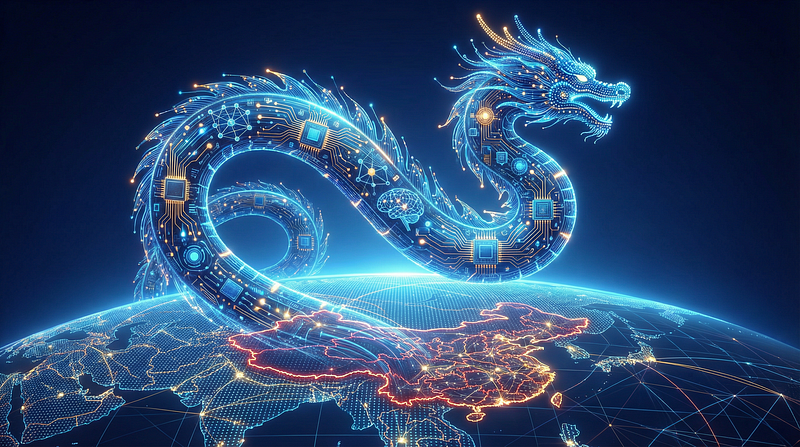
As any observer of digital themes is well aware, artificial intelligence has ceased to be merely a disruptive technology to become the epicentre of a geopolitical and geoeconomic dispute that is redefining power relations in the 21st century. Whilst the world watches and the United States attempts to maintain its leadership, China is quietly executing one of the most ambitious national strategies in recent history: transforming itself into the global AI leader by 2030. But what exactly is the Asian country seeking with this technological race? As we shall see, the answer goes far beyond innovation or competitiveness.
For two decades following the 1997 Asian financial crisis, the global economy prospered based on a simple synergy: the United States dominated software, whilst China manufactured hardware. This complementarity benefited both enormously and propelled global growth. From the first Trump administration onwards, Washington began using its companies’ dominance in software to contain China’s rise, forcing China to develop its own substitutes. With scale, talent and financial resources, the Asian country has all the conditions to achieve its objectives of technological autonomy. Paradoxically, this American pressure is motivating China to prevent precisely the emergence of dominance of systems or platforms in new technologies such as AI by US tech companies — exactly what Western investors hoped to achieve.
Transformation as state policy
In 2017, the Chinese government launched the strategic document “New Generation Artificial Intelligence Development Plan” (AIDP), which established ambitious and chronologically precise milestones. By 2020, the main idea would be to achieve technological parity with global AI leaders, making artificial intelligence a new engine of economic growth for China. By last year, the goal was to achieve world leadership in selected AI areas, generating 400 billion yuan in core industry and 5 trillion yuan in related sectors, establishing initial governance and security systems. For 2030, the primary objective: to become the principal global centre for AI innovation with a core industry of 1 trillion yuan and related industries of 10 trillion yuan, occupying the dominant segments of technology and consolidating China as the absolute world leader.
Even nearly a decade ago and still without the overwhelming presence of generative AI, this was not empty political rhetoric. Alibaba, one of the country’s main technology groups, reserved 380 billion yuan, or 54 billion dollars, for computing capacity and AI infrastructures in 2024 alone. According to Bank of America, China’s total investment in AI was estimated between 600–700 billion yuan (US$ 84–98 billion) for 2025. The massive investment, involving several national giants, reflects a coordination between government and private sector rarely seen in other economies, where companies such as Alibaba, ByteDance, Tencent and Huawei align their corporate strategies with national objectives.
Beyond economic competitiveness, China views AI as a catalyst for profound structural changes. The State Council formalised in August 2025 a strategy of intensive integration of artificial intelligence across all sectors of society and the economy, with the objective of reconfiguring modes of production and life. This transformative vision is explicitly linked to the Chinese political project. The massive implementation of AI is seen as part of the evolution of “socialism with Chinese characteristics” towards a new stage, where collaboration between humans and machines redefines labour and production relations. It is not merely about having the best technology, but about shaping how that technology reorganises society. And all this has been aligned with its policy for data economy, the foundation of any AI development strategy. The asset was elevated to a factor of production, alongside capital, labour, land and equipment.
The strategic importance of AI to the Chinese leadership becomes evident in the analysis of the Politburo study sessions in 2025 by Fred Gao, from Inside China. In February, the year’s first session integrated “AI security” within the holistic national security framework, signalling that emerging technologies are viewed not merely as economic opportunities, but as public security issues requiring preventive governance.
The second session, held on 25th April, was devoted entirely to the development and regulation of artificial intelligence. Professor Zheng Nanning, from Xi’an Jiaotong University, presented Politburo members with a vision that balances innovation with control. The session revealed three fundamental guidelines that structure the Chinese strategy:
· Technological self-sufficiency: Critical gaps were identified in fundamental theories and core technologies, especially in high-performance chips and basic software. The declared objective is to build an autonomous, controllable and collaborative system of hardware and software for AI. This is not merely nationalist rhetoric — it is a direct response to Western technological sanctions.
· Application-oriented development: Whilst technological autonomy is pursued, the emphasis is on immediate practical results. China wants to leverage its advantages in data resources, industrial systems, application scenarios and market potential. The strategy envisages a collaborative innovation system led by companies, integrating industry, academia, research and application.
· Full-cycle risk governance: The keywords “beneficial, secure and equitable” and “safe, reliable and controllable” appear repeatedly. The document emphasises technical monitoring, risk alerts and emergency response systems. AI must be developed, but under strict state control.
This dual approach — simultaneously pursuing technological advances whilst maintaining rigid control — characterises the Chinese model of AI development. It is a race for technological leadership that never loses sight of the imperative of political and social control.
Pragmatism versus concentration
One of the most striking characteristics of the Chinese approach is its practical orientation. Whilst the US explores concepts such as artificial general intelligence and artificial superintelligence, seeking to answer far-reaching questions, including the very definition of what it means to be human, China adopts a different stance. The Chinese focus is on the immediate application of AI in real scenarios to create economic value and increase industrial efficiency. This means integrating artificial intelligence into medical diagnostic systems, autonomous vehicles, educational platforms, surveillance systems and, principally, into production processes that can reduce costs and increase the global competitiveness of Chinese industry.
This philosophical difference reveals much about each power’s priorities. An article by Andy Xie illustrates this distinction well. Whilst Silicon Valley, with Washington’s support, seeks to create increasingly powerful and generalised systems, concentrating major investments in its national champions with high leverage capacity, China wants applications that solve concrete problems now, generating immediate returns for society and the economy.
In this sense, the Chinese bet on open-source platforms is not merely a market strategy, but a calculated geopolitical manoeuvre to prevent proprietary systems from becoming chokepoints. Whilst the United States invests trillions expecting to create new lucrative monopolies in the style of Microsoft, Google or Meta, China is deliberately preventing this scenario from materialising. Companies such as DeepSeek, Moonshot AI, Zhipu AI and MiniMax make their technologies available free or at very low costs, seeking to capture market share through user volume and ecosystem building, rather than immediate direct revenues.
Gartner consultancy estimated global investments in AI at 1.5 trillion dollars in 2025, surpassing 2 trillion by the end of the new year. The companies investing these amounts expect to achieve monopolistic power in a potentially gigantic market, betting that the “winner-takes-all” principle will function as in previous technological waves.
But reality is taking another course. Chinese open-source models already hold approximately 30% of the global AI market. The prediction is that in the near horizon they will surpass their American competitors both in market share and in speed of acquiring new users. Even if open-source models are not technically superior to proprietary ones, they may defeat adversaries simply by being sufficiently good to do the job — and by offering control to users.
This dynamic threatens to destroy the dreams of trillion-dollar profits that motivate current AI investments by Wall Street investors. The financial bubble may be about to burst not through technological failure, but through the impossibility of monopolistic monetisation in a scenario dominated by open and free alternatives based on other types of business.
Industrial policy and intellectual property
To justify the Chinese advance without admitting their own strategic failures, the West has constructed a convenient narrative: China progresses because it does not respect intellectual property. This “Chinese tale” serves as a moral excuse, transforming a complex problem of industrial policy into a simple fable with a single villain.
Reality, however, is quite different. Since 2014, China has established specialised intellectual property tribunals, integrated into an increasingly sophisticated judicial system. The country has become one of the principal drivers of global growth in patent applications, according to data from the World Intellectual Property Organization (WIPO). A country that despises intellectual property does not invest on this scale in registrations, litigation and institutional apparatus.
What exists, in truth, is a selective and strategic application of intellectual property. It functions as a switch: it is applied rigorously when it is convenient to stabilise a market or protect national champions, and grey zones are tolerated when the objective is to accelerate technological diffusion and collective learning. This pragmatic flexibility is what the West erroneously interprets as absence of protection.
As Enrique Dans shows us, what truly drives Chinese progress is not the absence of IP protection, but a massive, explicit and sustained industrial policy over time. The “Made in China 2025” programme was not merely a slogan, but a coordinated mobilisation of capital, permits, property assets and incentives for sectors considered priorities.
The electric vehicle sector exemplifies this model. With more than 30 manufacturers, China does not lead because it “copies without consequences”, but because for years it pushed financing, infrastructure, public demand and internal competition until transforming the market into a race for project execution. Dozens of manufacturers competing with minimal margins accelerated learning, cost reduction and control of the supply chain. The same pattern is observed in solar energy, where the country dominates global manufacturing after massively financing productive capacity, accepting overcapacity and price wars as a conscious part of the process.
This “distortion” that the West criticises is, in reality, a deliberately sought effect. It is impossible to compete against those who have transformed apparent inefficiencies into real competitive advantages. The DeepSeek case perfectly illustrates this capacity for innovation under pressure. The R1 model, launched at the beginning of 2025, achieved performance comparable to the best Western systems using less advanced hardware and at a fraction of the cost. This efficiency did not come from superior components, but from software optimisation and more intelligent architecture.
Defence and the sensitive part of the strategy
The military application of artificial intelligence represents perhaps the most critical — and least transparent — aspect of the Chinese strategy. The People’s Liberation Army (PLA) views AI as central to the next revolution in military affairs, capable of fundamentally transforming the metrics of military power. Analyses of PLA military contracts reveal seven priority areas of investment: intelligent and autonomous vehicles, intelligence and reconnaissance, predictive maintenance and logistics, information and electronic warfare, simulation and training, command and control, and automatic target recognition. The principal focus is on intelligent unmanned systems, which are expected to revolutionise traditional forms of combat.
In 2025, China revealed significant progress. During a military parade, AI-powered electronic warfare systemsdemonstrated the capacity to disconnect enemy networks and provide aerial and spatial countermeasures. State manufacturer Norinco presented the P60 military vehicle, capable of conducting autonomous combat support operations at 50 km/h, powered by the DeepSeek model. AI-assisted artillery systems were tested to improve precision and munitions allocation.
The military-civil fusion strategy allows civilian advances to feed military applications. Companies such as U-Tenet have developed specifically military AI models: Tianji (a cloud-based “decision brain” for operational planning), Tianwang (real-time intelligence repository) and Tianjian (integrated battlefield intelligence system). According to data from consultancy firm ifenxi, these systems were built with more than one million high-quality documents and 300 terabytes of military images.
The most delicate — and potentially dangerous — dimension in this field is the integration of AI into nuclear command and control (NC3) systems. In November 2024, Xi Jinping and Joe Biden agreed that the decision to use nuclear weapons must remain under human control, not being delegated to artificial intelligence. But reality is more complex than this commitment suggests.
China officially maintains a declaratory “no-first-use” nuclear policy since 1964. However, the US Department of Defencestates that the country is building various space-based and ground-based early warning sensors, designed to detect nuclear launches and provide the option of a launch-on-warning posture, allowing rapid retaliation before a nuclear weapon detonates. In 2024, China improved space-based early warning systems capable of detecting an intercontinental ballistic missile in 90 seconds and alerting a command centre within three to four minutes.
Chinese experts acknowledge that commanders can be overwhelmed by the massive quantity of information about adversarial actions, impeding rapid and informed decisions. AI emerges as a solution for processing early warning data, but this integration creates significant risks. Advanced AI models can “hallucinate” false data — in the nuclear context, this could mean falsely detecting an imminent attack. The “black box” nature of deep AI makes it difficult to understand the internal process that leads to a particular output, making verifications and redundancies essential.
Chinese analysts also identify threats to strategic stability. Predictive AI is capable of enhancing counterforce capabilities and providing offensive advantages that threaten adversarial retaliatory capabilities. AI and remote sensing technologies can enable autonomous unmanned underwater vehicles to detect, track and attack ballistic missile submarines, reducing their survivability. These dynamics create arms races and pressure for more robust strategic deterrence systems, triggering Chinese countermeasures to improve mobility and penetration capacity of its nuclear forces.
The question is not whether China will use AI to manage nuclear weapons, but the depth to which the technology will be integrated into systems that inform, recommend and facilitate nuclear decisions, nominally keeping humans “in the loop” of final decision-making. And, without naivety, understanding that companies such as Palantir and Anduril may be doing the same in their contracts with the Pentagon.
Technological autonomy and digital sovereignty
With these demands in place, one of the central objectives of the Chinese strategy is to reduce dependence on foreign technologies through ingenious solutions. By 2026, the country intends to triple domestic production of AI chips, also developing nanochips and industrial tools for intelligent automation. Huawei, for example, plans to launch a highly competitive system throughout this year, completely independent of American components.
In December 2025, analyses Markus Sandelin, Reuters revealed that China completed an operational EUV (extreme ultraviolet) lithography prototype in a high-security facility in Shenzhen — not through reverse engineering captured ASML machines, but by recruiting the humans who knew how to build them. Former ASML scientist Lin Nan, who headed EUV light source technology in the Netherlands from 2015 to 2021, filed eight EUV patents in eighteen months under a new identity at the Shanghai Institute of Optics. Signing bonuses ranged between US$ 420,000 and US$ 700,000, in addition to housing subsidies and identity documents. The machine fills an entire factory floor, operates with 3.42% conversion efficiency, and although it has not yet produced functional chips — targeted for 2028–2030 — it exists, compressing the predicted timeline from 2035–2040 to approximately a decade earlier.
This case exemplifies a fundamental structural error in Western technological security strategy: the assumption that knowledge lives in machines, not in people. Whilst export controls blocked ASML’s sale of EUV systems to China, the Chinese talent acquisition operation functioned in plain sight because artefacts are never the real asset — they are merely receipts of the knowledge that exists in human minds.
The West secured approximately six years of temporal advantage, but squandered that time with self-congratulation about the controls, consolidation of existing dependencies and continued concentration in Taiwan, assuming the gap would never close. The lesson is now repeating with Ukraine, whose engineers have developed the most advanced defence systems in real combat testing — knowledge that China is positioned to extract in the same manner, whilst the West offers minimum viable support instead of strategic investment in the talent that represents irreplaceable value.
This pursuit of autonomy goes beyond economic security; it concerns digital sovereignty. China does not want to depend on technologies that can be used as instruments of geopolitical pressure by adversaries. Control over the AI production chain, from chips to final applications, guarantees freedom of action in an increasingly polarised world.
Not by chance, one of the most impressive aspects of the Chinese strategy is how the country has circumvented American sanctions that limit access to cutting-edge AI chips. Chinese suppliers opted for an approach based on using a greater number of chips, rather than resorting to high-performance GPUs such as Nvidia’s. A strategy that made Trump recently revise his policy and allow the principal US manufacturer to continue supplying these critical components to Chinese companies.
Leadership in the Global South and multilateral governance
The Chinese strategy also has an important international dimension. At the 2025 World AI Conference, Beijing presented a 13-point plan for the global governance of so-called AI+, highlighting international collaboration and the state’s role in creating norms. By 2027, the goal is for new infrastructures, technologies and AI-based services to be present in 70% of the real Chinese economy, reaching more than 90% by 2030. Recently, it did something similar in terms of international cooperation with its policy paper on cooperation with Latin America and the Caribbean.
Unlike the United States, which promotes technology exports primarily to strategic allies, China positions itself as a partner to Global South countries, offering technology transfer with less political conditioning. This approach seeks to build global influence through AI cooperation, positioning China as a leader in technological multilateralism.
A race that has just begun
The Sino-American competition in AI is far from over. This dispute should continue to alternate between phases of strong market appreciation and moments of correction, reflecting both the pace of investment and technological, economic and geopolitical uncertainties.
And what does China want with AI, after all? It wants technological leadership, strategic autonomy, economic transformation, social reorganisation and global influence. It wants to redefine power relations in the 21st century through mastery of the technology that promises to be one of the most transformative since the Industrial Revolution. And unlike many declarations of intent, China presents not merely ambition, but coordinated execution, massive investment and concrete results that already place it as a direct rival to the United States.
The most difficult consequence to admit is that the West trusted excessively that the market, by itself, would be sufficient to sustain technological and industrial leadership. That stage has ended. The United States acknowledged this with the CHIPS and Science Act and the explicit mobilisation of public resources to rebuild semiconductor capacity and control exports of these components. The European Union is attempting to advance, with more internal friction, through the Net-Zero Industry Act.
For Brazil, the question is not whether we should copy the Chinese model. The real question is whether we are willing to admit that, without coordinated industrial policy, without a scalability strategy and without recognising that speed also matters, there is no possibility of building technological sovereignty.
This is the great Chinese advantage: the capacity to follow fully intentional strategies marked for the long term. Continuing to deny this reality does not make us more virtuous, nor more liberal, nor more competitive. It merely makes us less relevant in the global technological scenario being redesigned at this very moment.