Connecting dots
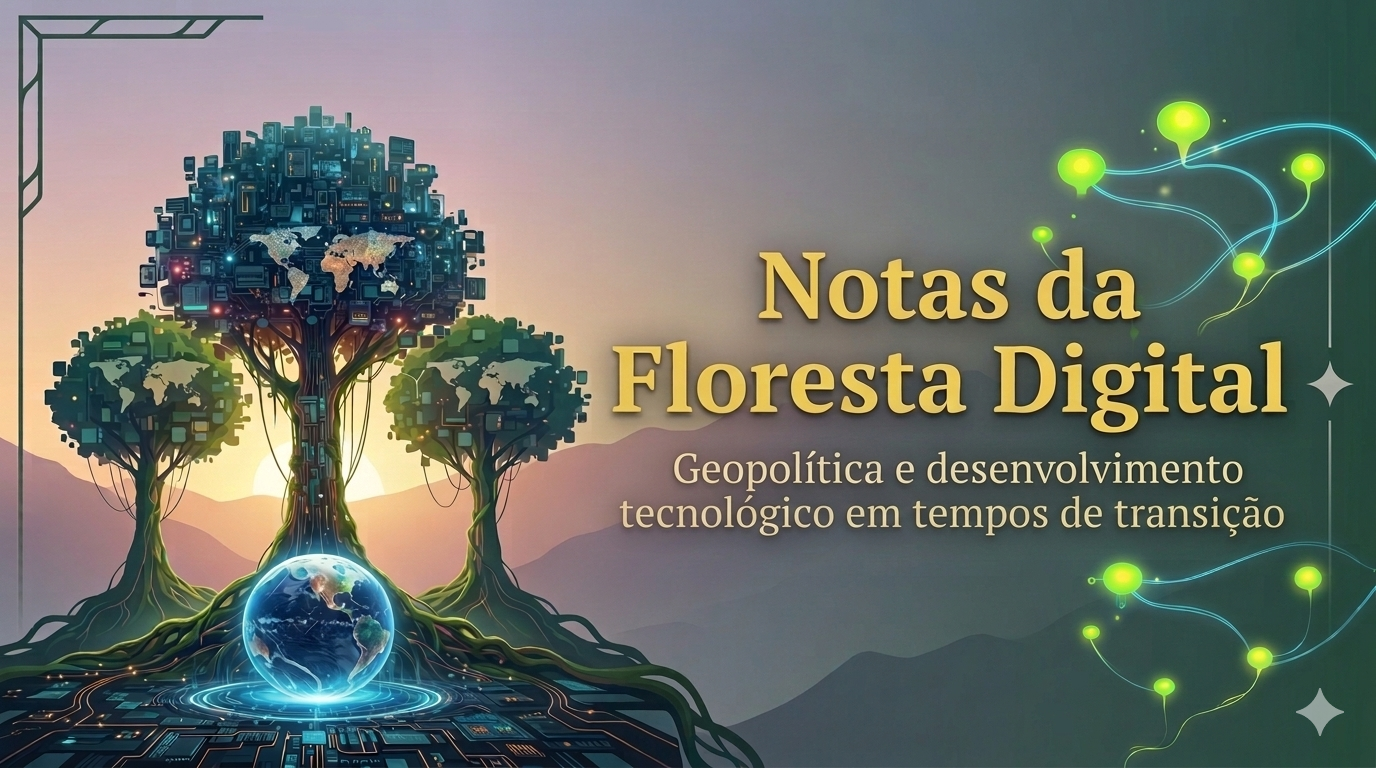
The texts in this site are the fruit of everyday observations spanning almost three decades, covering one of the most crucial moments in Brazil and the world with regard to the evolution of a revolution. More than a new phase of digital transformation — marked by the adoption and use of disruptive technologies — we are witnessing the rise of a new sector to the status of engine of the global economy. A sector that does not merely play its role as a monopolistic productive agent, but whose actions impact politics, culture, warfare, democracies, ways of life, and personal relationships on a planetary scale.
A small group of transnational conglomerates that, by altering a business model or amplifying a particular piece of information, can affect the way billions of people eat, communicate, consume, and vote. They can cause mass mental illness or save lives. They can generate employment opportunities or drive a person into bankruptcy through gambling debts. They can elect autocrats or make people more tolerant.
Such influence, guaranteed by an omnipresence across every territory, has exacted its toll on humanity. Whether through the consumption of natural resources on a monumental scale, or through the encouragement and promotion of hate speech dressed up as the exercise of freedom of expression, it seems the world is coming to realise that we have reached the limits of permissiveness towards these groups and their controlling capital. After a lethargy lasting at least two decades, citizens and governments have recognised that a course correction is necessary.
Yet the task of establishing institutional guardrails for this runaway train is a challenge that also carries a price. For half a century, a liberal ideology has been built around a fallacy that has since hardened into dogma — a narrative holding that the Internet is free and open and cannot be altered in its essence without risking the fragmentation of the global network, and with it the end of a great alliance forged by people and institutions seeking the common good.
This conception, which no longer finds any grounding in reality, has served as a protective cloak for the expansion and unchecked operation of these firms without any form of regulation or state oversight, unlike every other economic sector. Anyone who questions this view is branded an authoritarian and an enemy of freedom of expression.
The texts the reader will find here attempt to tell these stories in such a way that each digital tree, one by one, might give some sense of the forest in which we find ourselves entangled. Good luck on the journey, dear pilgrim!
I'm a passionate Brazilian civil servant working on the digital agenda, writing about topics such as the digital economy, internet governance, digital platform regulation, the data economy, geopolitics and related matters. I use this space to share my thoughts on these issues against the backdrop of geopolitical change in the emerging new world order. And also I distribute a daily newsletter about news on the same topics.
About
Floresta Digital is an independent publication launched in 2024 by James Görgen. If you subscribe today, you'll get full access to the website as well as email newsletters about new content when it's available. Your subscription makes this site possible, and allows Floresta Digital to continue to exist. Thank you!
Access all areas
By signing up, you'll get access to the full archive of everything that's been published before and everything that's still to come. Your very own private library.
Fresh content, delivered
Stay up to date with new content sent straight to your inbox! No more worrying about whether you missed something because of a pesky algorithm or news feed.
Meet people like you
Join a community of other subscribers who share the same interests.
Start your own thing
Enjoying the experience? Get started for free and set up your very own subscription business using Ghost, the same platform that powers this website.